

Synopsis
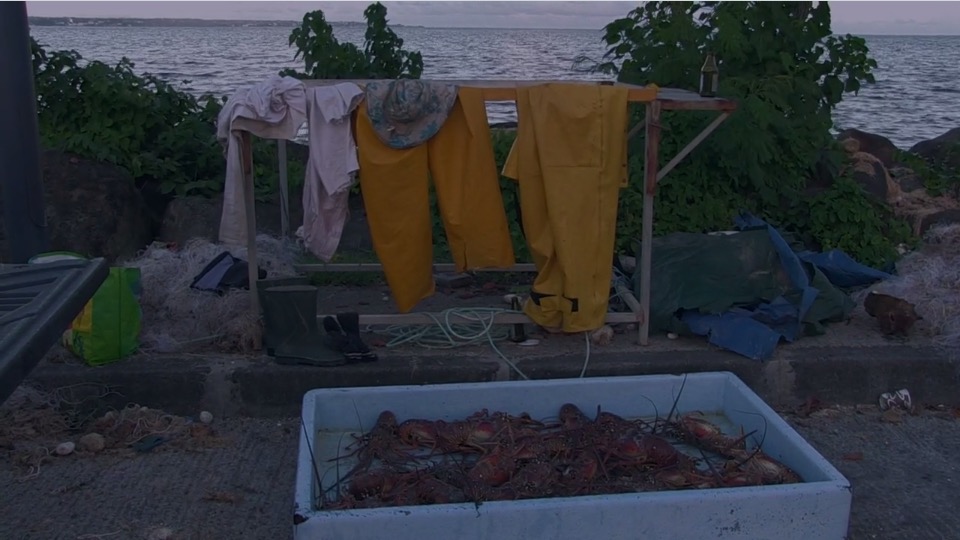
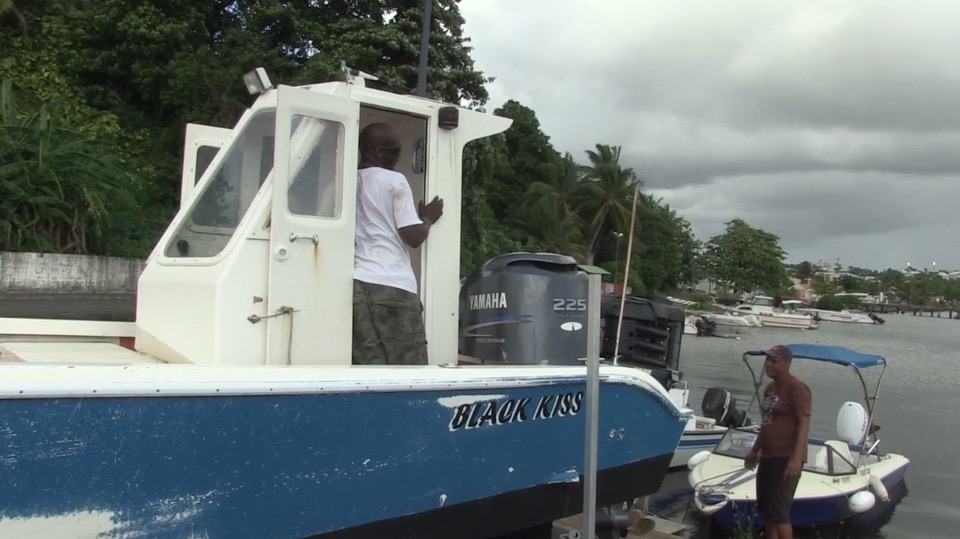
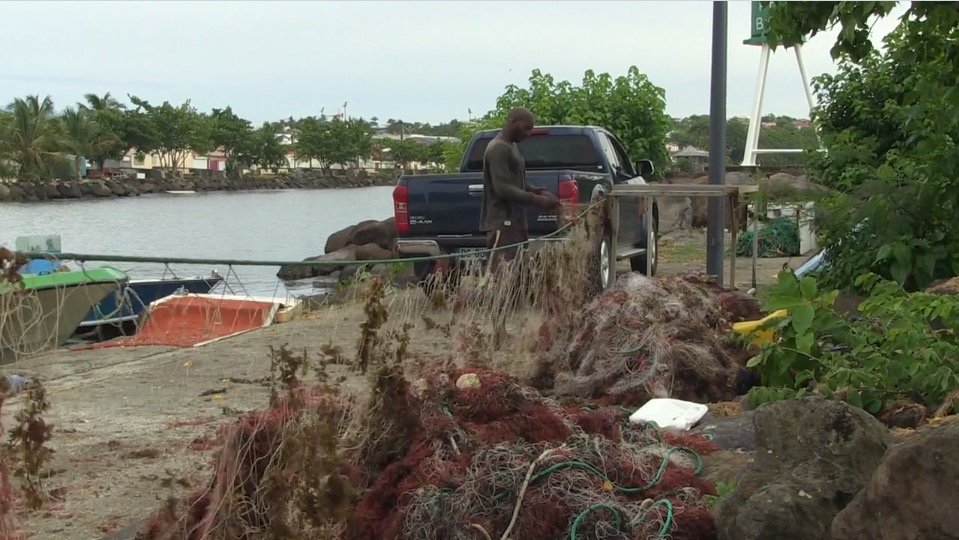
Bruno, a young fisherman, owner of the “Black Kiss”, is seeing the coastal fishing threatened by invasive seaweed, the Sargasso, and by the chlordecone, used in particular in the banana plantations. This highly powerful insecticide is contaminating the marine fauna and flora. In view of the authorities’ inertia, he has decided to fight to save his livelihood and has refused the only proposal that the state seems to be able to offer him: to train for another career. “I’m a disappearing species, just like a turtle or an iguana. In the zoo, there’ll be a notice saying: This was a fisherman”.
Rewards, festivals and diffusions
Festival international de Films "Pêcheurs du Monde"
Rencontres Cinémas Martinique
Trinidad and Tobago Film Festival
Prix Littéraire des marins-pêcheurs guadeloupéens
Terra Festival
IFCinéma (plateforme de l'Institut français)
Mois du Film Documentaire
Caribbean Film Academy
Mariette Monpierre
Director
Born in Guadeloupe, Mariette Monpierre grew up in Paris, where she earned a master’s degree in Applied Foreign Languages and a bachelor’s degree in Media Techniques at the Sorbonne. She completed her studies in Massachusetts before moving to New York.
She secured a position as a producer and then ventured into directing in 1993, working on commercials, music videos, documentaries, and fiction films. In 1997, New York City’s health department commissioned her first documentary, Knowledge is Power, to raise awareness about HIV. In 2002, her short film Rendez-vous was nominated for the Djibril Diop Mambety Award in partnership with the Directors' Fortnight at Cannes. It was also selected for some of the most prestigious international film festivals. In 2003, Mariette Monpierre won the Best Documentary Award at the Reel Sisters Film Festival in Brooklyn for Sweet Mickey for President?, a sharp portrait of Haiti's future president, Michel Martelly, when he was a popular singer.
In 2011, Elza (also known as Le Bonheur d’Elza) was released, making Mariette Monpierre the first Guadeloupean woman to direct a feature film shot in Guadeloupe. This achievement placed her among the three Caribbean women directors to have directed a feature film, alongside Sarah Maldoror and Euzhan Palcy. The film was a great success in Guadeloupe, screened in theaters in the United States, and attracted significant attention from the press, particularly the New York Times, which named it a "Critic’s Pick." It won numerous awards at international festivals, including a BAFTA in 2012 and the Jury Award for Best First Feature Director at the Pan African Film Festival in Los Angeles.
Since then, she has directed several documentaries, including Between Two Shores and Facing Mecca.
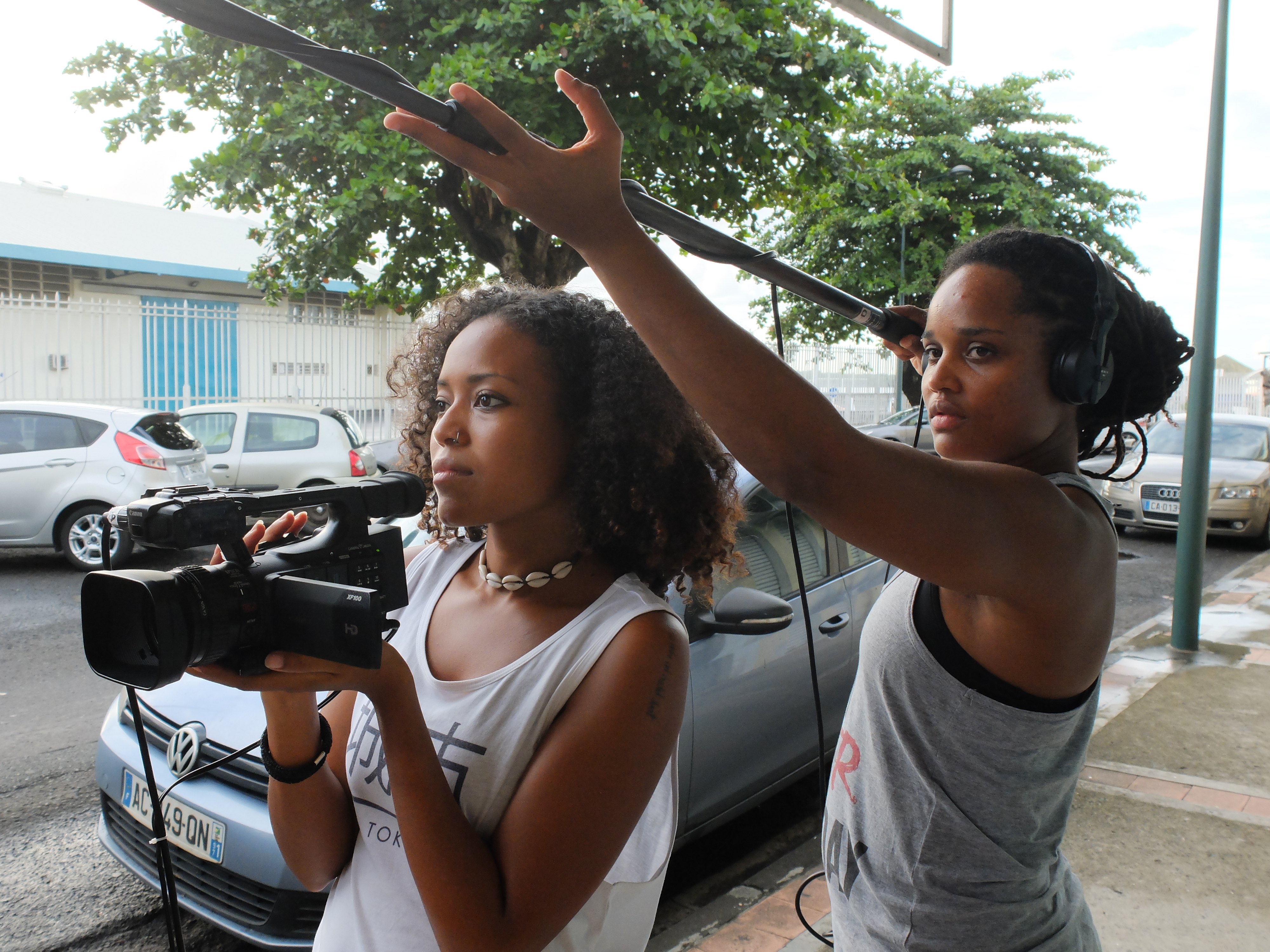
About : Workshops in Guadeloupe
Since 2011, Varan Caribbean supports the developing of the caribbean documentary in Guadeloupe by setting up many workshops.
Ask Us
Questions about our training courses? Please contact us 01 43 56 64 04
6, impasse de Mont Louis
75011 Paris